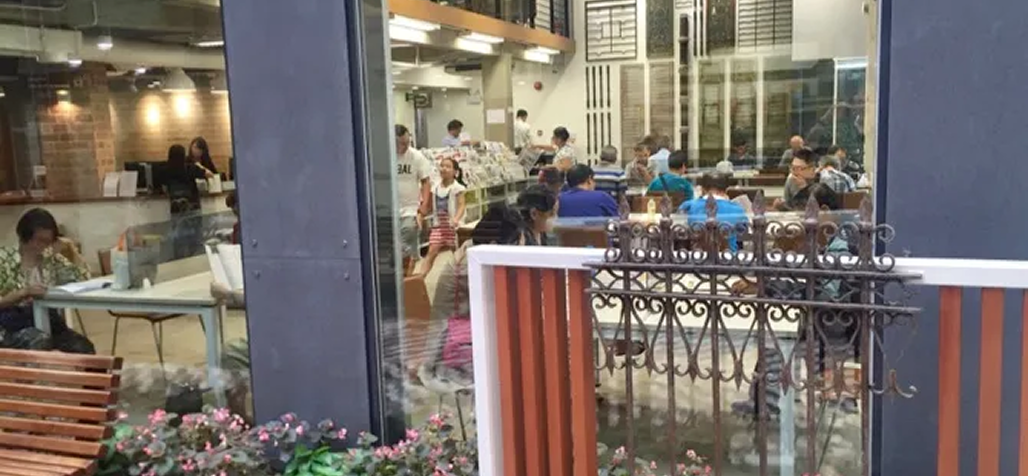
在 內港區一條擁擠的街道上,居民發現了一個驚喜–一排七座破舊的建築物已變成一座閃閃發光的新圖書館。Patane 圖書館於 12 月 9 日開幕,開幕典禮由社會文化司司長譚志源和當時的文化局(IC)總裁吳偉明主持。從那時起,它每天吸引約 700 名訪客,免費欣賞各式各樣的報紙、雜誌、書籍、電影和音樂。
這些建築物建於 1930 年代,當時用作商店,向當時城市中心的造船廠和碼頭銷售木材。但隨著經濟轉型,商店關閉,建築物則改建為擠迫的貧民公寓。由於年久失修,在 2010 年,業主(一間房地產公司)想要拆除這些建築物。IC 介入,建議修復建築物並將其改建為圖書館。該公司花了六年時間,投資了2,600萬澳門幣來活化該物業,並在接下來的五年內,每年向該房地產公司支付11個月的額外月租165,000澳門元。
“來自 IC 文化遺產部研究與規劃司的建築師 Lam Kai Wun 說:「在空地上建築是最容易的,而且成本較低。”但它沒有什麼特別之處。它沒有故事。他補充說,”這塊土地比新建築更有價值。
“We kept the elements from the original buildings. The old residents say that they remember the old wood windows and doors. They have a feeling for this place and say that they used to live here. For each person, each room has a story and they remember it. The story goes on and, we hope, will be told from one generation to the next,” explains Lam.

Built in the 1930s, the seven buildings on Rua da Ribeira do Patane combined European and Southeast Asian architectural styles. They housed timber merchants who sold their goods to the city’s booming shipyards located a short distance away in the Inner Harbor. It was the business center of the city, where passenger and cargo ships arrived from Hong Kong and the mainland, and where fishing vessels set out to sea. The street bustled with people and clients for the timber.
The exterior of the buildings reflected a style common across southern China with a covering over the pavement that provided protection for pedestrians from both rain and the scorching summer sun. Inside, each building was comprised of a shop on the ground floor, stocks on the top floor, and living quarters for the merchant and their family on the first floor.
Over time, the economy of Macau changed. As the mainland developed its own shipyards, the city could no longer compete in terms of price of land and labor. Production moved to port cities in Guangdong. As their sales dwindled, the timber merchants were forced to shut down. Consumer traffic diminished as well with the emergence of Avenida de Almeida Ribeiro as the city’s commercial center, full of new shops, banks, hotels, and restaurants.
The poor condition of the buildings complicated the restoration process. “Our principle was to preserve the whole façade,” says Lam. The first job was to clear out all the waste and additional structures put in by the new residents. “We needed 25–30 rubbish trucks to remove everything. Only then could we see the original state of the buildings.”
Since the buildings stand on reclaimed land, there had been slippage in some places during the long period of neglect. So Lam and his team repaired the severely damaged areas, and reinforced the foundations. They built a new roof using glass and steel frames, and demolished the walls that separated the seven buildings to create a single unit. Old wood windows and doors from each wall were retained, and a portion preserved for visitors to see.
To accommodate the collection of books and audiovisual materials, the team built a new structure in three of the shops capable of supporting such a massive weight. They also added a lift, to move books and people, and modern drainage and fire prevention systems.
The new glass front allows passersby to see what is inside, and encourages them to come in. To make it even more inviting, Lam placed two benches at the entrance where people can sit, and sip a coffee or eat a snack. Inside they reproduced the original paint scheme, and hung some of the original shutters on one wall, a feature popular with elderly residents.
Why build a library and not a museum or another kind of public facility? To meet demand. According to Lo Chi Keong, chief of Division of Reader Services and Promotion of the IC’s Department of Public Library Management, the city’s 17 public libraries drew 2.5 million visitors last year.
“Our aim is to have one within 5–10 minutes walking distance of every resident. In July 2012, we opened a small one nearby, the Red Market Library,” he says. A former branch of the Post Office, the 260 square meter facility has seating for 73, as well as eight computers and a collection of 7,100 books, mainly on home economics. Although it is open 24 hours a day, the Red Market Library does not have library officials on duty after 8 p.m..
“But the Red Market Library is too small. The area needed a larger one and the residents were asking for one. Each district needs a cultural center, and this one is a historic building that deserves to be preserved. Each library needs its own special features. The Patane Library specializes in drama and music,” Lo explains.
The Patane Library consists of three floors, covering an area of 1,130 square meters, with 170 seats for readers, as well as space to read the 79 newspapers and 643 magazines. The periodicals come from all over the world, including the mainland, Taiwan, Singapore, Europe, and the United States. The collection also boasts 14,000 books and 4,100 audiovisual materials. It has a multi-media zone to show films and concerts, as well as a room for meetings and school projects.
“Since it opened, we have attracted a wide range of people,” says Lo. “In the morning, elderly people queue up for the opening at 9.30 a.m. to read newspapers and magazines. During the lunch break, we have white-collar people coming from their offices. After the end of class, students come from the schools. Parents come in with their children. We have activities for children, as well as for adults. Presentations from publishers and authors have been especially popular. Readers can access both traditional and electronic books, and order books from other libraries.”
Ten years ago, the derelict buildings that now comprise the Patane Library were something to avoid. Now the IC has transformed them into a social and cultural center in the Patane district, and a prime example of how to combine the past and the present. Mark O´Neill*